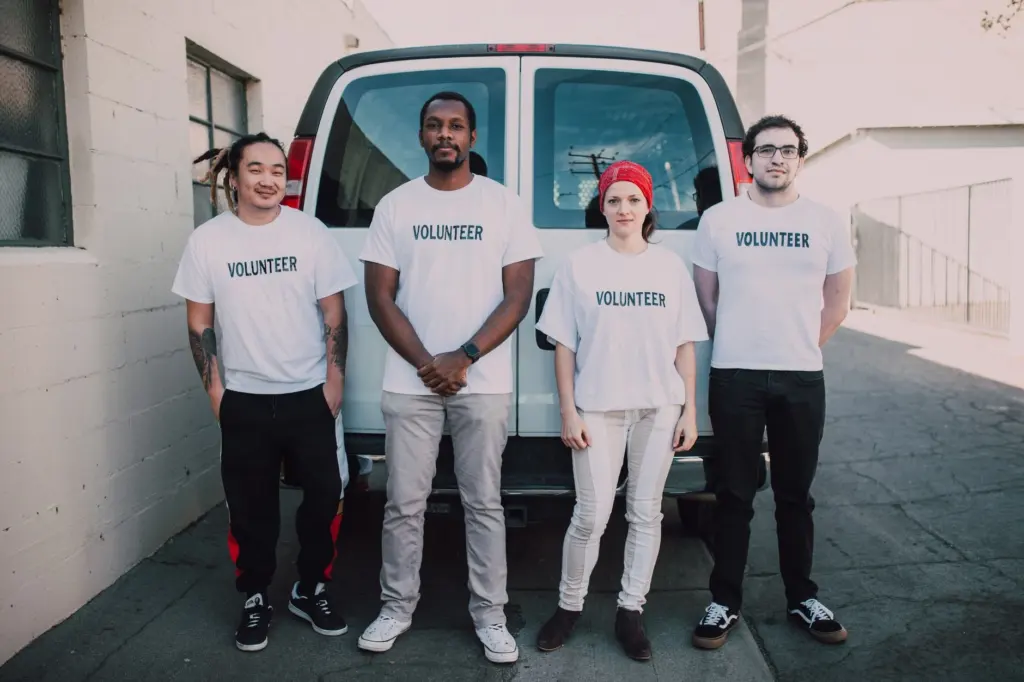
Your book club, troop or street wants to help, and you need to know how to start a donation drive. Contact the receiving nonprofit first, agree what it needs, then collect for a short, clearly announced window.
That sequence works for a family or an established organization, because a donation drive can be casual or formal, according to Goodwill in Arizona. This page sets out the routes into the topic so you can start where your situation fits. If you would rather begin as a helper than as an organizer, read how to start volunteering first.
Pick your route
The right starting point depends on who you are and what you want to produce. Four routes cover most small community charities, youth groups and neighborhood teams.
- You want to run your first drive. Follow the core steps in the next section, then use the sections on timing, team and promotion to fill in the detail.
- You lead a youth group, troop or congregation. Skim the core steps, then go to the section on youth, family and group projects to match the drive to your members.
- You want to raise money rather than collect goods. Read the fundraising section, then return to the team and promotion sections, which apply to cash drives as much as item drives.
- You want to help with someone else’s drive. Go straight to the section on finding volunteer opportunities near you.
On every route the same principle applies. A drive is only useful if the receiving organization wants what you collect, so the recipient’s needs shape each decision below.
Core steps for starting a donation drive

A donation drive begins with a recipient, a small team and a clear list of what to collect. The order below follows guidance from Goodwill in Arizona, a United Way chapter and Dorchester Habitat.

- Contact the beneficiary. Reach out to the organization that will receive your donations and ask about its current needs.
- Form a planning committee. Share the duties and designate one leader so planners and participants know who to ask.
- Write guidelines. Tell participants what to donate and what to leave at home, and give them a contact.
- Choose dates and bin locations. Pick a collection window and put bins where people already pass.
- Recruit and assign roles. Bring in as many helpers as you can and give each a defined job.
- Promote the specific need. Say exactly what you are collecting and report progress toward the goal.
- Review and deliver. Check donations against the recipient’s requirements, then take them to the nonprofit.
- Thank people and report back. Let donors know their gifts were appreciated and tell them when you reach your goal.
If you want a printable version of these stages, use the donation drive checklist. For a longer walkthrough of coordinating the whole effort, see how to organize a community drive.

What to collect and who receives it
The recipient decides what counts as a useful donation, and your drive should be designed backward from that answer.
Contact the recipient before you collect
Goodwill’s guidance is to reach out to an organization that will benefit before you host a drive. Our Just Future asks groups to contact it first to discuss the most current needs and to get on its calendar. The call is worth making even if you already have a cause in mind. It stops you from filling a garage with items nobody can use, and it gives you a firm date for delivery.
Recipients set their own rules, so treat the following as examples of what to ask. Our Just Future can only accept new items, which rules out gently used goods. It also asks that donated food be at least two weeks from its expiration date. It names staples such as beans, pastas, peanut butter, tomato sauce and canned goods as items residents often need. If your recipient is a food-focused charity, that kind of list is exactly what you should request and then reproduce on your flyer.
Write guidelines participants can follow
Goodwill suggests handing out a flyer with a dos and don’ts list and contact information so participants know exactly what they should or should not donate. Put the recipient’s firmest exclusions at the top, because those are the items most likely to be dropped off by well-meaning people. Add a named person and a way to reach them. A clear flyer also saves your sorting volunteers from deciding, one box at a time, what to do with items that do not fit.
Goodwill also advises that you review donations before giving them to the recipient. Build that review into your plan as a real task with real people assigned, not an afterthought on delivery day.
Timing, bins and locations
Most successful collection drives take 5-10 business days, include at least one weekend and do not run beyond two weeks, according to United Way’s supply drive guidance. Treat that as a planning range. A window with a clear end date gives donors a reason to act now, and the weekend gives people who work weekdays a chance to take part.
The same guidance advises placing collection bins near high-traffic locations. Think about where your own community already gathers: a workplace lobby, a place of worship, a school entrance or a club meeting room. A well-placed bin collects more than a well-promoted bin in a corner nobody visits. Where you have enough helpers, Dorchester Habitat suggests collecting items on multiple days and using several locations, which widens your reach but also multiplies the staffing you need.
Choose the number of sites according to your helpers rather than your ambition. One well-supervised site beats three unattended ones. For a closer look at placement, signage and handling, see how to set up a donation drop off location.
Choosing a drive format
Drives differ in how long they run, how many sites they use and whether they collect goods or money. The comparison below helps you match the format to your group.
| Format | Suits | Key condition | Planning use |
|---|---|---|---|
| Short supply collection | Office teams, church and civic groups, birthday parties | Bins near high-traffic locations; typically 5-10 business days including a weekend, not beyond two weeks | Choose it for a quick, visible result with one drop-off and a clear end date. |
| Multi-day, multi-location collection | Groups with enough members to cover each site | Collect on multiple days; the more people involved, the faster tasks are accomplished | Choose it only when you can staff every site, otherwise stay with one location. |
| Money-focused drive | Groups raising funds for a charity project | One team member records all monetary donations for transparency | Name the record-keeper before the first gift arrives and agree with the recipient that funds are welcome. |
These points draw on United Way’s supply drive guide and Dorchester Habitat’s donation drive advice.
For a first drive, the short supply collection is the safest choice, since it asks the least of your volunteers and finishes before enthusiasm fades. Move to a multi-location or money-focused format once you have a team that has already worked together once.
Building your team and volunteer roles
A drive runs on a committee with one clear leader. Goodwill recommends dividing planning duties across a committee and designating a leader, so both planners and participants have someone to go to. In a small charity, that leader is often the person who made the first call to the recipient, which keeps the relationship in one set of hands.
Dorchester Habitat’s advice is to recruit all possible members, noting that the more people involved, the faster tasks are accomplished. Packing, sorting and cleanup go quicker with more hands, and the extra people also bring their own networks to the drive. If recruiting is your main obstacle, how to recruit volunteers covers that stage step by step.
Give people jobs rather than a vague invitation. On collection day, Dorchester Habitat suggests one member to sort in-kind donations and another to count the donated items, and one team member to keep track of all monetary donations for transparency. Those three roles, sorter, counter and money recorder, are a sensible minimum for any drive that handles both goods and cash.
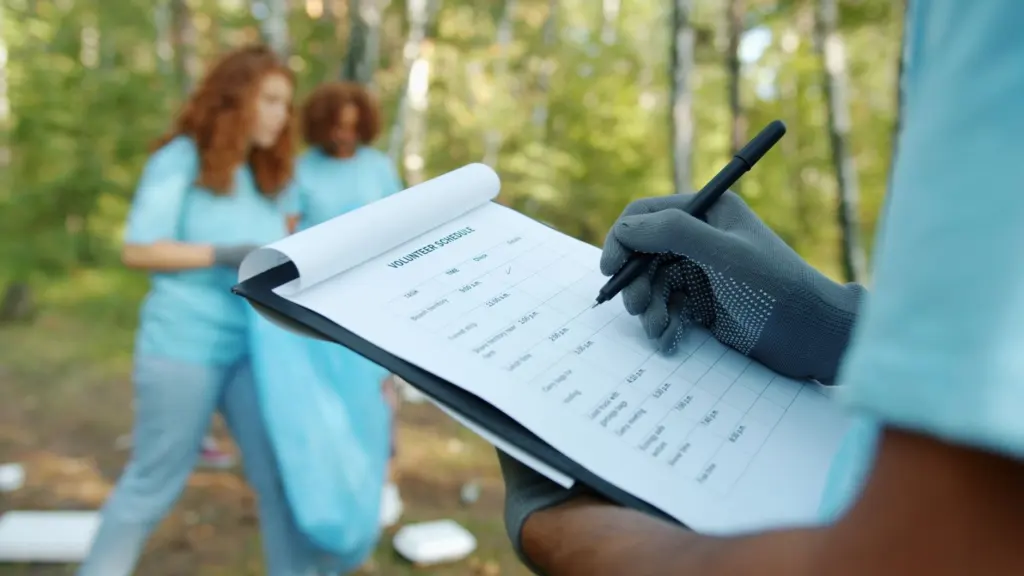
A written schedule helps more than reminders. Put every role and shift on one sheet, ask people to commit to a slot, and keep the leader’s contact details at the top. A ready-made volunteer sign up sheet template will save you building the grid from scratch.
Promoting the drive
Effective promotion is specific. United Way’s advice is to call out the specific need and to report progress toward the goal as the drive runs. “Please donate” asks people to guess, whereas a named item and a visible target tell them exactly how to help and whether their gift will matter.
Local partners can carry part of this load. Dorchester Habitat notes that beyond a regional organization, finding small businesses and partnering with them can help with venue, needs and marketing. A neighborhood shop that hosts a bin and mentions the drive to customers extends your reach without extra cost. Choose partners whose foot traffic matches the people you want to reach.
Keep your message consistent across flyer, social posts and spoken announcements, and repeat the recipient’s rules wherever you repeat the ask. For channels, wording and timing, see how to promote a donation drive.
Raising money for a charity project
To raise money for a charity project, agree with the recipient that funds are welcome, name a person to record every gift and publicize a clear goal. Cash drives need more care than item drives because the question of trust is sharper. Dorchester Habitat’s guidance is that one team member should keep track of all monetary donations for transparency. A treasurer role with a simple written record protects both donors and your group.
Goodwill points to another lever: many companies or organizations will donate a match of the total funds raised. Ask people in your group whether their employers run matching programs, and mention the possibility on your flyer so donors know their gift may go further. A match is not guaranteed, so state it as a possibility until a company confirms.
Dorchester Habitat also advises keeping your donors informed, especially when you have reached your goal. Short progress updates during the drive keep people engaged, and a closing update shows donors what their money achieved. Small groups often skip this step, yet it is what turns a one-off giver into someone who supports your next drive. Keep fundraising for a charity project tied to one concrete purpose, because a specific goal is easier to promote and easier to report on.
Finding volunteer opportunities near you
The quickest way to find volunteer opportunities near you is to contact local nonprofits directly and ask what they need. Our Just Future, for example, asks groups to contact it to discuss current needs before they start. The same approach works with food pantries, shelters, school groups and service clubs in your area, since most are glad to explain where help is useful.
Existing drives are another entry point. Dorchester Habitat recommends partnering with local organizations and small businesses, which also means those organizations are good places to ask about drives already under way. Joining one as a helper teaches you how a drive runs before you lead your own, and it builds the relationships you will need later.
If you are weighing whether to commit your time, benefits of volunteering explains what you and your group can gain from regular service. If you would rather organize something than join something, how to organize a volunteer event covers events that are not built around a collection.
Youth, family and group service projects
Donation drives suit groups because they can be scaled to the people available. Our Just Future calls them a great project for neighborhoods, book clubs, knitting groups, religious organizations and Rotary clubs, and United Way’s guidance describes collections as perfect for office team building, church and civic group activities. In every case the group supplies the people and the nonprofit supplies the purpose.

Match the task to your members
For a youth group, the leader should plan the logistics and hand the members the visible, hands-on jobs: making the flyer, standing by the bin, helping with sorting and counting. These are the same sorting and counting roles described earlier, so young members can take a real share of the work rather than watch adults do it. Adult supervision belongs around handling decisions, such as what to reject or how to deliver safely.
When the group includes parents and children, family volunteer opportunities will help you choose tasks that suit mixed ages. A church or club leader looking for the next project after a first drive will find more options in youth group service project ideas, and a workplace or club team can browse group volunteer activities.
Use the calendar to your advantage
Groups often have natural rhythms, such as school terms or seasonal gatherings, and a drive fits best when it uses an event your members already attend. For seasonal projects, holiday volunteer ideas gives themes you can adapt. Whatever the season, still confirm the date with the recipient first, since a nonprofit that is already collecting for other drives may not be ready for yours.
Drive day and delivery
Drive day is mostly about sorting, counting and a clean handover. Set up a table with boxes, put the sorter and counter at it, and keep a separate, supervised place for any cash. The recipient’s flyer rules are your sorting guide, so keep a copy at the table.
Goodwill’s advice to make sure you review your donations before giving them to the recipient applies here. Anything the recipient cannot use is easier to set aside at your table than to explain at its door. Keep a running count while you sort, because the total feeds your progress report and your thank-you message.
The last step in United Way’s process is to take your supplies to United Way or a local nonprofit. Confirm the delivery time with your contact in advance, and send enough people to load and unload quickly. A van or a few cars is usually enough for a small community drive, and the loading crew should include the leader or the counter so the totals are handed over correctly.
After the drive: thanks, records and follow-up
Closing the loop is what makes people willing to help again. Our Just Future encourages groups to let participants know their donations were appreciated, and notes that a thank-you can be a note, text, call or post. Choose the channel your donors already use, and send the message soon after delivery, while the effort is fresh.
Dorchester Habitat adds that you should keep your donors informed, especially when you have reached your goal. Tell them the final total and where it went, using the count your counter kept during sorting. A plain message with a real number does more for trust than a long, general one.
Volunteers also deserve a record and a thank-you of their own. If your members need service hours for school or a club, set up a simple log before the drive begins, and see how to log volunteer hours for a method that works for small groups. When the work is done, volunteer appreciation ideas offers ways to recognize your helpers beyond a quick word.
Frequently asked questions
| Question | Answer |
|---|---|
| Do we need to be a registered organization to run a drive? | No. Goodwill describes a drive as something that can be casual or formal, run by a family or by an established organization. What matters is that a receiving organization has agreed to take the donations. |
| Which groups suit a donation drive? | Our Just Future names neighborhoods, book clubs, knitting groups, religious organizations and Rotary as good fits. United Way adds office teams, civic groups and birthday parties. |
| How are tax receipts handled for a group donation? | It depends on the recipient and local law. Our Just Future says that under Oregon tax law it can provide a single tax receipt for the total value of a group donation. Ask your recipient how it handles receipts before the drive begins. |
| How can the nonprofit thank the people who took part? | Our Just Future asks groups to send a list of participants with contact details so the organization can add its own thanks. Check with your recipient whether it offers the same. |