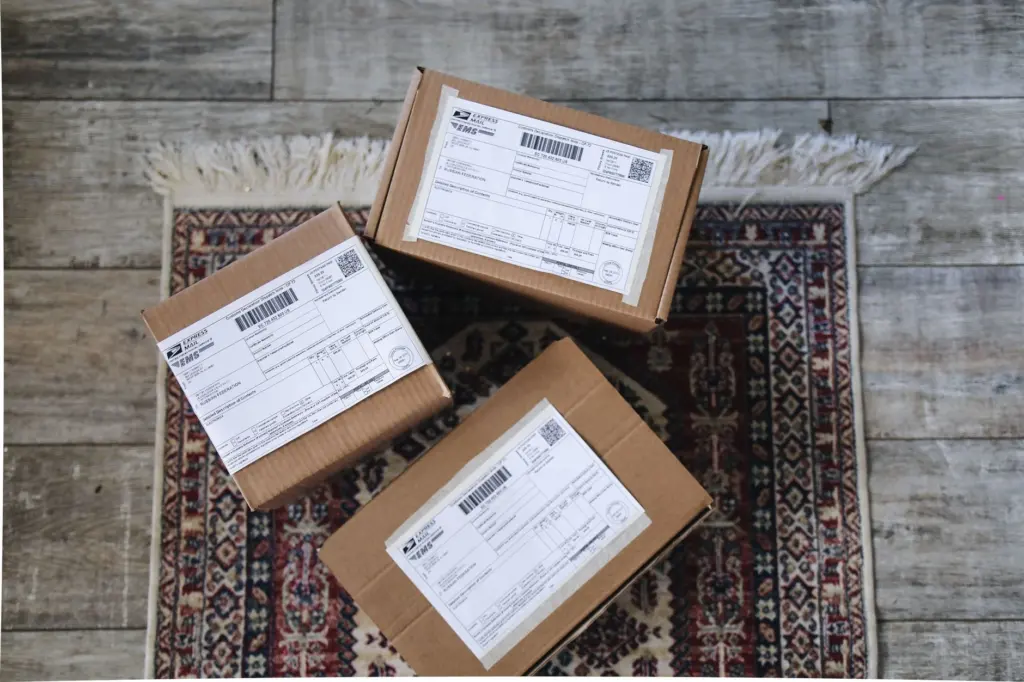
Here is how to address a package to a soldier APO: write the recipient’s name, a unit and mail-center line, then APO, a two-character AA, AE or AP code and the ZIP code. Leave out any city or country.
This guide covers one task: building a correct military address label. For the wider picture of what to send and why, see our guide to troop care packages.
Before you start
You need a confirmed address from the service member, and a package that fits military mail limits. A label built from guesses is the most common reason a care package goes astray.
- The address, copied from the service member. Ask for the exact unit and mail-center line, and for whether the mail goes to an APO, FPO or DPO. Do not infer these from a base name or a deployment country.
- A package within the size limits. Military mail packages must be 70 lbs or less and no more than 130 in. combined length and girth.
- A customs form. Packages to military destinations must include a completed PS Form 2976 or PS Form 2976-A, according to the same guidance.
- Allowed contents. Check what not to send in a care package to troops before you pack, so the address work is not wasted on a box that cannot be delivered.
What APO, FPO and DPO mean
APO, FPO and DPO are the three post-office designations used for military and diplomatic mail. Each one replaces the city on a normal address and tells the Postal Service which mail system to use. According to veteran.com:
- APO stands for Army/Air Force Post Office, the military post office for Army and Air Force personnel.
- FPO stands for Fleet Post Office, used for Navy and Marine personnel. It is also the format for ships, which are addressed by ship name and hull number.
- DPO stands for Diplomatic Post Office, the preferred designation for mail to Department of State overseas post offices.
These are not international addresses. They are assigned a ZIP code, which is why the label looks like a domestic one. Which designation applies depends on the recipient’s branch or post, so take it from the service member rather than choosing it yourself.
Building the address line by line
Step 1: Confirm the address with the service member
Ask the service member to send the full address in writing, ideally as a message you can copy and paste. Retyping from memory is where digits get transposed. Confirm the same address works for packages, not just letters, before you buy supplies.

Step 2: Write the recipient’s name
Put one named person on the first line. A generic line such as “Any Service Member” is a recognised mistake, because the package needs a specific name and unit number to reach anyone. If you want to support a unit rather than an individual, ask the unit’s point of contact for a named recipient first.
Step 3: Add the unit and mail-center line
The second line carries the routing number. According to veteran.com, this is a PSC (Postal Service Center), CMR (Community Mail Room) or UMR (Unit Mail Room) number, or a similar center number such as RPO, APO or OMDC. Ship addresses use the ship’s name and hull number instead.
If you only have a unit name and no box or center number, ask the service member for the number. Adding a formation name, for example a battalion or regiment designation, is unnecessary and does not replace the routing line.
Step 4: Write APO, FPO or DPO, the region code and the ZIP code
The last line holds three things in order: the designation, a two-character region code, and the ZIP code. USPS Publication 28 states that overseas military addresses must contain the APO or FPO designation with a two-character “state” abbreviation and a ZIP or ZIP+4. The region code is not a real state. It tells the system which part of the world the mail is bound for.
| Code | Region | ZIP prefix | Planning use |
|---|---|---|---|
| AE | Europe, the Middle East, Africa and Canada | 090 to 099 | Use when the service member’s address already shows AE. Do not switch it for a nearby region. |
| AP | The Pacific | 962 to 966 | Typical for Pacific posts and many ship addresses. The prefix should match the code. |
| AA | The Americas, excluding Canada | 340 | Use only when the address given to you reads AA. |
Region definitions are from USPS Publication 28, and the ZIP prefixes are from a shipper’s address guide.
The table is a quick consistency check. If the code says AP but the ZIP starts in the AE range, one of them was copied wrongly, so go back to the service member.
Step 5: Leave out the city and country
Do not add a foreign city or country name anywhere on the label. The guidance on military mail says city and country names are excluded to prevent mail from entering foreign mail networks. The APO, FPO or DPO designation does the job the city would do.
Online shipping forms are the one place this gets awkward. One shipper’s guidance says the country field must be United States and the city field must contain APO, DPO or FPO. On a handwritten label, write no country at all.

Step 6: Attach the label and the customs form
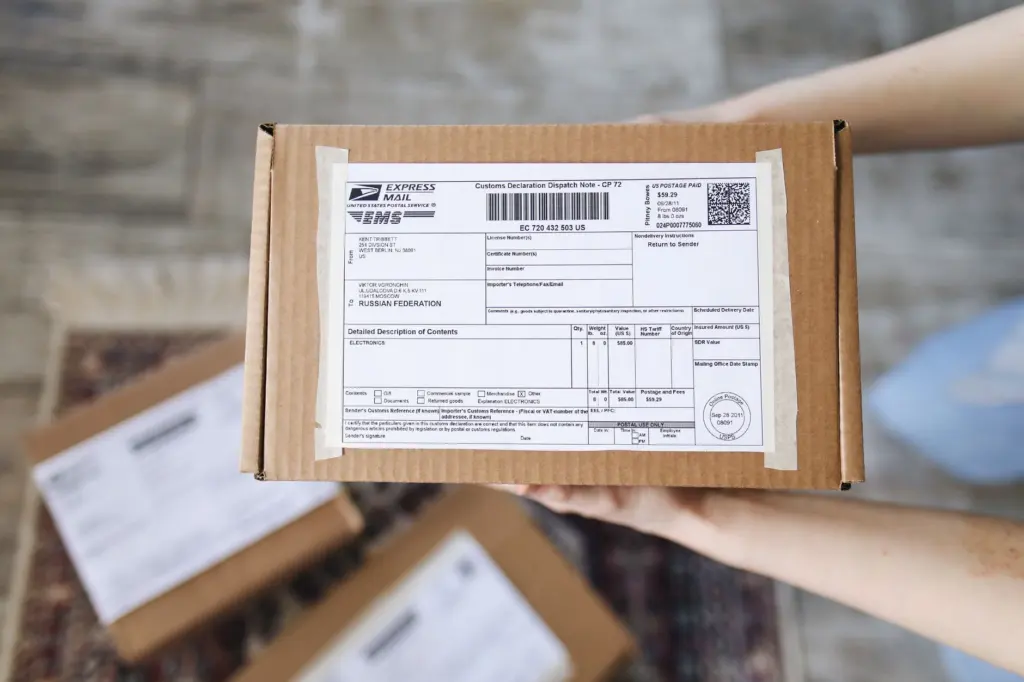
Print or write the address clearly, apply the label to the box, and attach the completed PS Form 2976 or PS Form 2976-A. Read the finished label against the service member’s message one last time, line by line, before you seal anything.

Worked examples for APO, FPO and DPO
These sample formats, taken from veteran.com’s military mail guide, use made-up names and numbers. Copy the structure, never the digits.
APO (Army or Air Force unit)
GEN George Washington
PSC 5555, Box 12345
APO AE 09204-1234
FPO (Navy ship)
CAPT John Paul Jones
USS Cochrane (DDG-21)
FPO AP 96543-1234
DPO (State Department post)
Benjamin Franklin
Unit 9876, Box 0000
DPO AE 09498-0048
Notice what is shared. Each has a name, a routing line, then designation, region code and ZIP, and none has a city or country. The APO and DPO examples route through AE, and the FPO ship example uses AP. The FPO example shows the ship name and hull number where a land-based unit would have a PSC or CMR number.
Common mistakes that delay military mail
Most failures come from adding information rather than leaving it out. The mistakes below are the ones that show up repeatedly in shipper guidance.
- A foreign city or country on the label. It is a common error and can pull the parcel toward a foreign mail network instead of the military system.
- A generic recipient. A package marked for “any service member” has no named person or unit number to match.
- A region code that disagrees with the ZIP. If AE sits next to a Pacific-range ZIP, the label contradicts itself.
- A formation name instead of a routing number. The mail-center line is what carries the package to the right unit.
- Switching APO for FPO. The designation depends on the recipient’s branch or post, so copy it exactly as given.
Postage, carrier and timing
Postage to an APO, FPO or DPO address is standard domestic postage, and USPS is the only carrier that can deliver there, according to veteran.com. That is why the ZIP code matters so much. For what different box sizes and services cost, see the cost to ship care package to military overseas.
The same source says military mail usually arrives in 7 to 10 days depending on the destination country, while Priority Mail parcels take 10 to 15 days. Treat these as typical ranges, not promises, and build in extra time for holidays and remote locations.
Frequently asked questions
Is rank required on the address?
No. Rank, grade or rating is optional on the recipient line, according to veteran.com. The name itself, the routing line and the last line are what matter.
Can I leave off the four-digit ZIP extension?
USPS Publication 28 says the address must carry a ZIP or ZIP+4. Use the full form if the service member gave it to you, since that is the address they were issued.
Does a Coast Guard member use FPO?
One comparison guide lists FPO as the format for Navy, Marine Corps and Coast Guard mail. Confirm the designation with the recipient before labelling.